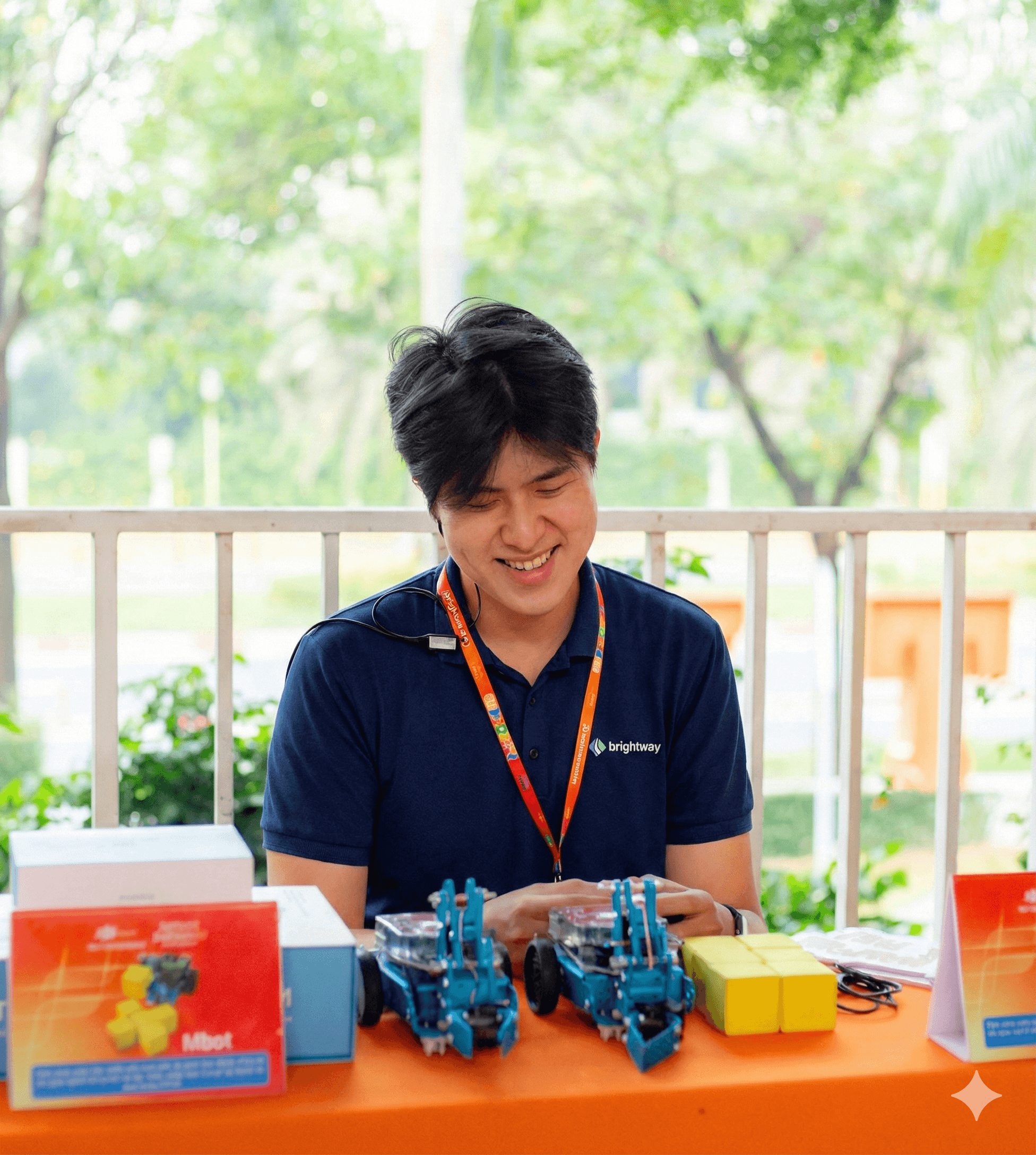
AIPA Lab conducts a range of research activities that reflect the iterative workflow of Physical AI research. These activities support the development and validation of intelligent physical systems through systematic experimentation, prototype development, and internal knowledge sharing. The research workflow follows a continuous cycle from problem definition through simulation, algorithm development, system integration, physical deployment, and performance evaluation.
Research and Experimentation
Research and experimentation at AIPA Lab encompass robotic manipulation experiments, simulation-to-real validation studies, and system integration tests. Robotic manipulation experiments investigate grasping strategies, motion planning algorithms, and perception-action coupling in controlled laboratory environments. Researchers observe and refine the interaction of sensing, decision making, and actuation as robots perform tasks with physical objects.
Simulation-to-real validation studies assess how policies and algorithms trained in virtual environments transfer to physical hardware. These studies measure performance gaps between simulated and real-world execution, providing data to improve domain randomization strategies and model robustness. Digital twin testing enables researchers to compare predicted behaviors against observed outcomes, supporting iterative refinement of simulation fidelity.
Through these experiments, the laboratory generates empirical data that informs algorithm development and system design decisions. The emphasis on reproducibility and systematic documentation ensures that experimental findings can be validated and extended in subsequent research cycles.
Prototype and Demo Development
Prototype and demonstration development at AIPA Lab bridges theoretical research and practical deployment. The laboratory builds working prototypes that showcase Physical AI capabilities and validate system integration approaches. These prototypes include robot arm demonstrations for vision-guided manipulation, smart factory test scenarios for automated production workflows, and digital twin demonstrations for simulation-driven validation.
Robot arm demonstrations integrate perception, planning, and control modules to perform grasping and manipulation tasks with varied objects. Smart factory test scenarios evaluate how intelligent systems coordinate across multiple stations, sensors, and actuators in production-like environments. Digital twin demonstrations show how virtual models can predict and validate physical system behaviors before deployment.
The prototyping process follows an iterative cycle from concept through implementation to evaluation. Each prototype serves as a platform for testing research hypotheses and demonstrating technical capabilities to collaborators and stakeholders. The lessons learned from prototype development feed back into research planning and algorithm refinement.
Internal Workshops and Study Sessions
AIPA Lab organizes regular training programs on robotics, simulation, and AI engineering for students and researchers. These internal workshops and study sessions promote collaborative learning and continuous research progress within the laboratory. Reading groups on Physical AI topics review recent publications, discuss theoretical foundations, and identify research opportunities relevant to ongoing projects.
Hands-on training sessions provide practical experience with robotics platforms, simulation tools, and software frameworks used in laboratory research. Participants learn to operate robotic systems, configure simulation environments, and implement perception and control algorithms. These sessions build technical skills that support participation in experimental work and prototype development.
Experiment review and analysis sessions allow researchers to present findings, discuss methodological approaches, and receive feedback from colleagues. Technical seminars cover specialized topics in machine learning, control theory, computer vision, and system integration. These activities foster knowledge transfer across the research team and maintain awareness of developments in the broader Physical AI research community.
Training and Collaboration
AIPA Lab welcomes collaboration with students, researchers, and industry partners interested in Physical AI research. Training programs and research opportunities are available for those who wish to contribute to laboratory activities. To learn more about collaboration models or access research resources, please visit the related pages.