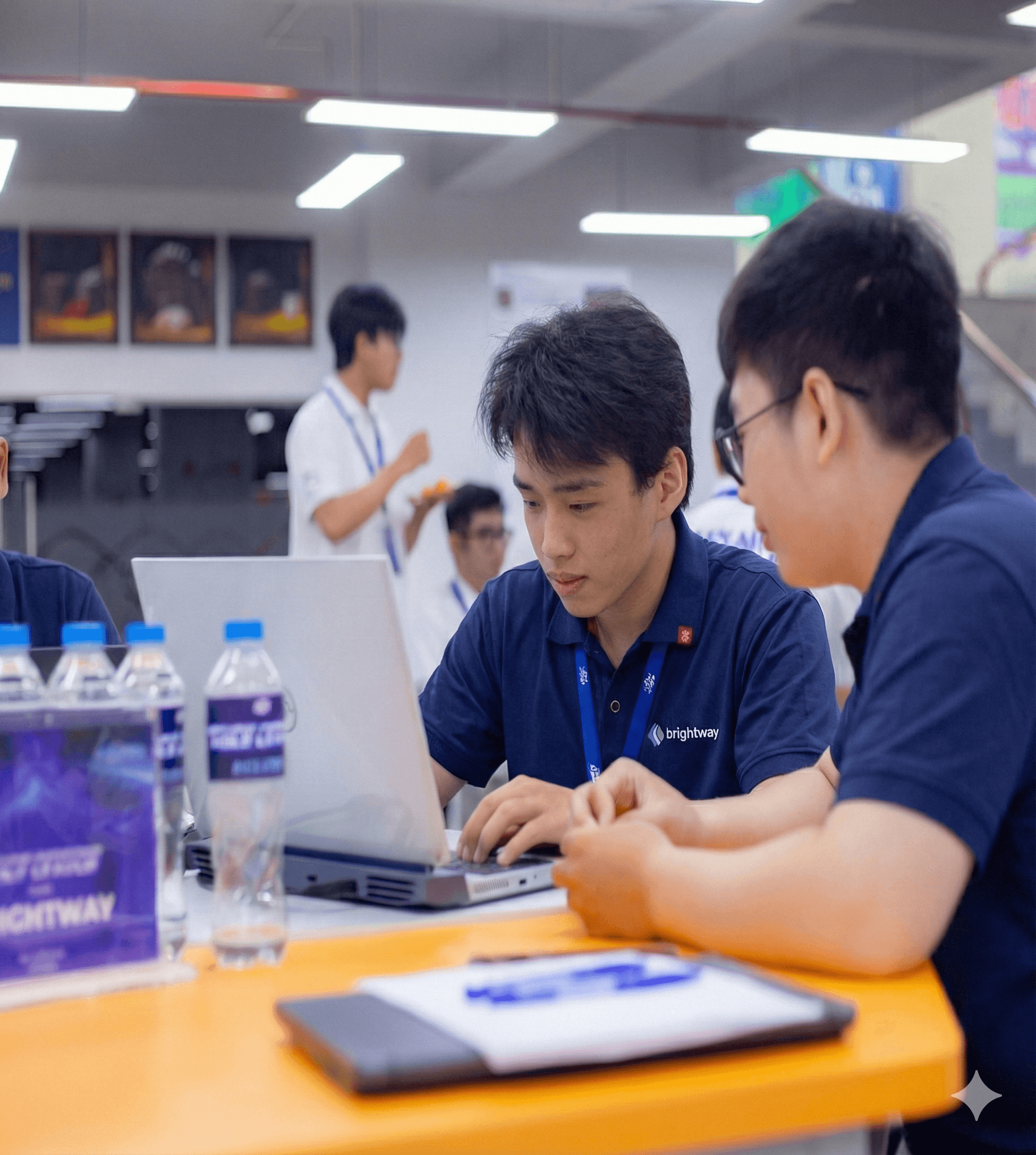
AIPA Lab operates as a research infrastructure dedicated to the development and validation of intelligent physical systems. The laboratory provides experimental platforms for robotics, perception, and embedded intelligence research. Our infrastructure supports the full research cycle from algorithm development through physical deployment, enabling researchers to test and integrate systems in controlled environments before real-world application.
Hardware Platforms
The laboratory maintains a range of hardware platforms for manipulation, perception, and mobility research. Industrial and collaborative robot arms serve as the primary manipulation platforms, enabling experiments in grasping, assembly, and pick-and-place operations. These robotic systems are equipped with force and tactile sensors that provide feedback for contact-rich manipulation tasks.
Multi-camera vision systems provide perception capabilities for object detection, pose estimation, and scene understanding. The vision infrastructure includes depth cameras and multi-view setups that support three-dimensional reconstruction and visual servoing applications. These systems are integrated with the manipulation platforms to enable vision-guided robotic operations.
Edge AI computing devices support on-device inference for real-time perception and decision making. The laboratory operates GPU-enabled embedded platforms that run optimized neural network models with low latency. AGV and mobile robot platforms extend research capabilities to navigation, localization, and mobile manipulation scenarios.
Simulation and Integration Environments
Physics-based simulation environments form a core component of the laboratory infrastructure. NVIDIA Isaac Sim provides high-fidelity simulation capabilities for robotic manipulation, navigation, and manufacturing scenarios. These simulation tools replicate the dynamics, kinematics, and sensor characteristics of physical systems, enabling researchers to develop and test algorithms in virtual environments before hardware deployment.
Digital twin frameworks connect simulation models to physical systems, supporting virtual commissioning and real-time monitoring. The integration between simulation and physical hardware enables sim-to-real transfer experiments, where policies trained in simulation are validated on actual robots. Domain randomization techniques are applied during training to improve policy robustness when transferred to real-world conditions.
ROS2 middleware provides the communication backbone for system integration, connecting perception, planning, and control modules across both simulated and physical platforms. AI training pipelines and monitoring dashboards support the development workflow from data collection through model deployment.
Testing and Validation Frameworks
The laboratory includes dedicated robotic workcells designed for structured experimentation. These workcells provide controlled environments where manipulation tasks, assembly operations, and perception algorithms can be evaluated under repeatable conditions. Safety monitoring systems ensure that experiments involving physical robots are conducted within defined operational boundaries.
Simulation clusters support parallel evaluation of algorithms and policies, enabling researchers to run large-scale experiments efficiently. Testing and validation zones allow side-by-side comparison of simulated and physical system behaviors, providing data for sim-to-real gap analysis and performance benchmarking.
The infrastructure supports iterative research cycles where systems are developed in simulation, tested in controlled physical environments, and refined based on experimental feedback. This approach accelerates the transition from theoretical research to deployable prototypes while maintaining rigorous evaluation standards throughout the development process.
Explore Our Research Activities
The laboratory infrastructure supports a range of research activities and experimental workflows. To learn more about how these facilities are used in practice or to explore collaboration opportunities, please visit the related pages.