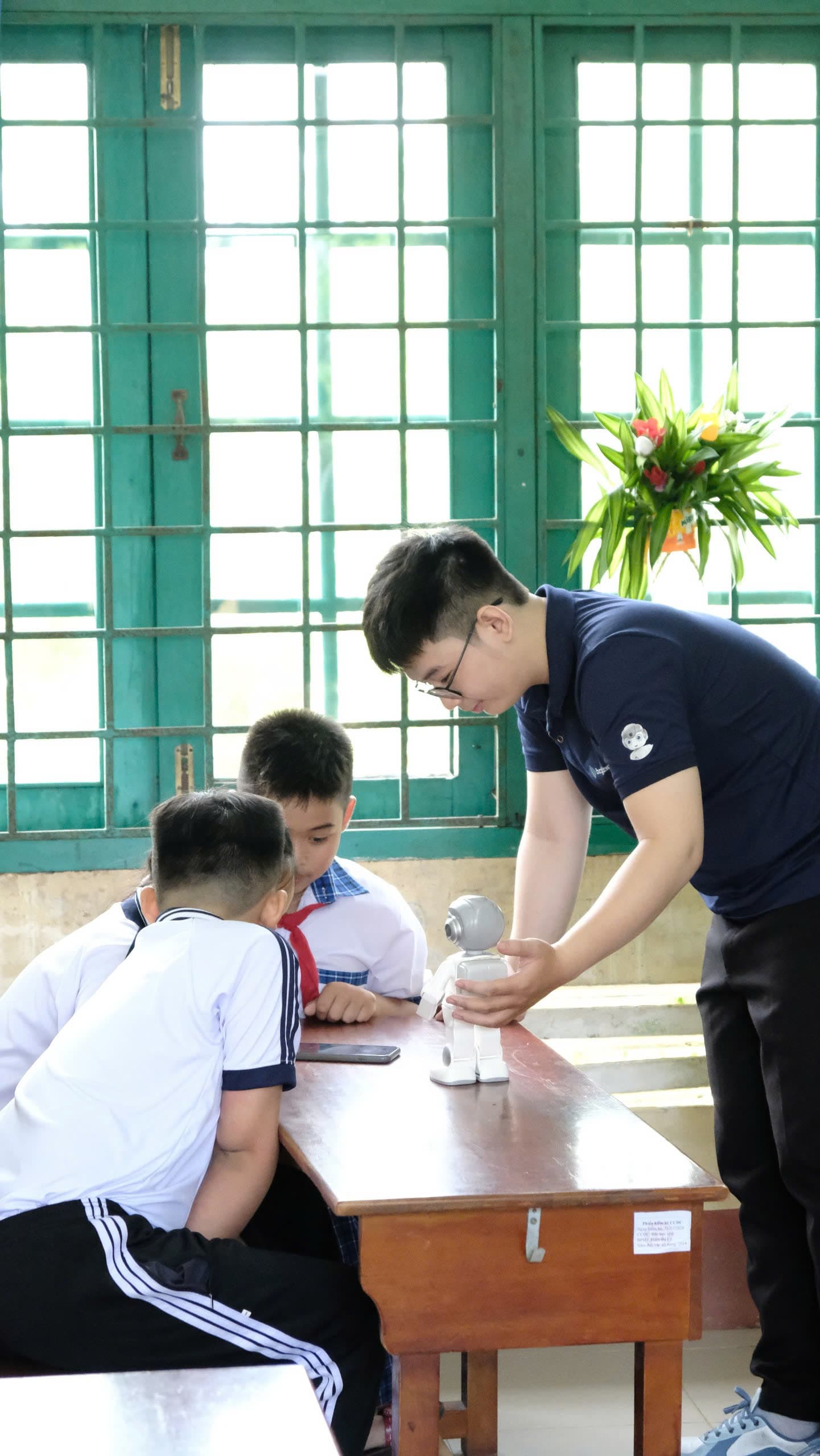
AIPA Lab conducts applied research in Physical AI, bridging the gap between intelligent algorithms and reliable physical behavior. Our mission is to develop, validate, and deploy AI systems that perceive, decide, and act effectively in real-world environments. We emphasize hands-on experimentation, system-level integration, and deployable prototypes that translate simulation-based learning into robust physical execution.
Robot Manipulation and Embodied AI
This research area focuses on learning-based and model-based manipulation methods for robotic arms operating in unstructured and semi-structured environments. We investigate vision-guided grasping techniques that enable robots to identify, localize, and manipulate objects using visual perception systems including depth cameras and multi-view setups.
Our work incorporates reinforcement learning and imitation learning approaches to train robots that can generalize manipulation skills across diverse object categories. We study perception-action coupling to ensure that sensory feedback informs motor commands in real time, enabling adaptive behaviors during physical interaction. Learning from demonstration allows robots to acquire complex manipulation sequences from human operators, while reinforcement learning enables autonomous skill refinement through trial and error in simulated and physical settings.
Applications of this research include industrial assembly tasks, flexible packaging operations, logistics automation, and service robotics scenarios where robots must handle varied objects reliably and safely.
Physical AI Digital Twin
The Physical AI Digital Twin research area investigates simulation-driven workflows that support learning, validation, and rapid prototyping for robotic systems. We develop physics-based digital twin platforms that accurately replicate the dynamics, kinematics, and sensor characteristics of physical robots and their operating environments.
A central focus is sim-to-real transfer, which addresses the challenge of deploying policies trained in simulation to real hardware. We employ domain randomization techniques that vary simulation parameters such as lighting, friction, and object properties to produce robust policies that generalize to real-world conditions. Physics-aware learning methods ensure that models respect physical constraints and produce plausible behaviors when transferred to actual robots.
Our digital twin research supports virtual commissioning of robotic workcells, enabling engineers to test and optimize automation systems before physical deployment. This approach reduces development time, minimizes hardware wear, and accelerates iteration cycles for manufacturing optimization.
Smart Factory Intelligence
Smart Factory Intelligence research addresses the design and deployment of intelligent manufacturing systems that integrate sensing, computation, and actuation across production environments. We study cyber-physical systems architectures that connect shop floor equipment, edge computing nodes, and cloud-based analytics platforms to enable coordinated, data-driven decision making.
Our work includes AI-driven production optimization, where machine learning models analyze production data to identify bottlenecks, predict equipment failures, and recommend scheduling adjustments. Predictive maintenance research leverages sensor data and diagnostic algorithms to anticipate component degradation, reducing unplanned downtime and extending equipment lifespan.
We also investigate multi-agent coordination for automated production lines, quality inspection systems powered by computer vision, and energy management strategies that optimize resource consumption. These research efforts aim to enhance productivity, reliability, and sustainability in modern manufacturing facilities.
Edge Physical AI Systems
Edge Physical AI Systems research focuses on deploying low-latency, on-device intelligence for robots and physical automation systems. We investigate efficient model architectures and deployment pipelines that enable real-time perception and decision making on embedded hardware platforms with constrained computational resources.
Key methods include model compression techniques such as pruning, quantization, and knowledge distillation that reduce neural network size and inference time without significant accuracy loss. We leverage optimization frameworks including ONNX and TensorRT to accelerate inference on GPU-enabled edge devices. Hardware acceleration strategies exploit specialized compute units to maximize throughput while minimizing power consumption.
Applications of edge AI research span mobile robots, autonomous guided vehicles, autonomous mobile robots, and embedded robotics platforms. By enabling fast, local inference, edge AI systems support responsive control loops, reduce dependence on network connectivity, and enhance the autonomy and safety of physical AI deployments.
Explore Further
Our research translates into experimental projects, laboratory prototypes, and pilot deployments. To learn more about ongoing work and collaboration opportunities, visit the Projects and Collaboration pages.